
TLDR
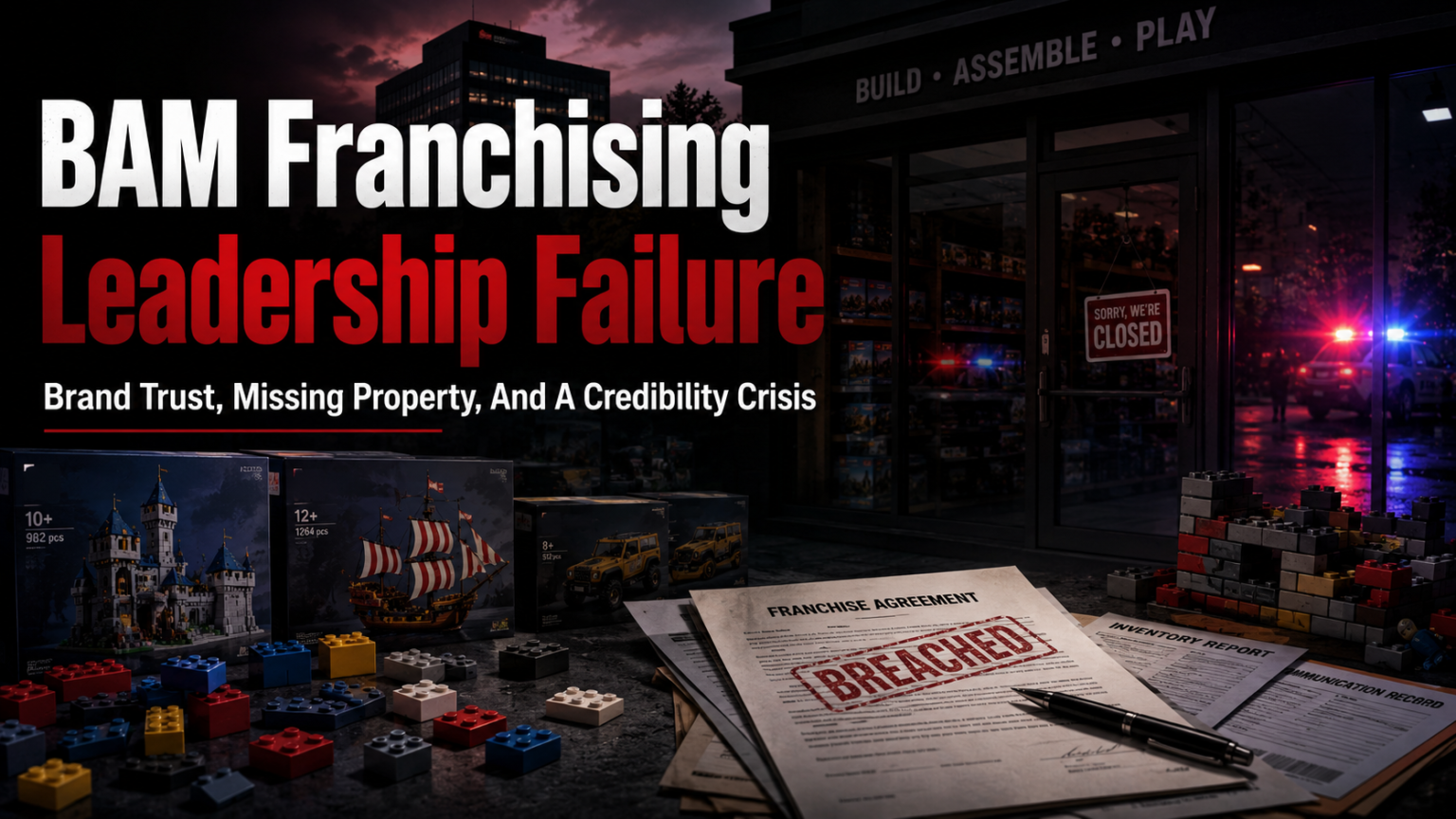
BAM Franchising had a chance to make an allegedly harmed family whole and protect the Bricks & Minifigs brand. Instead, the company appears to have chosen denial, blame-shifting, franchise technicalities and legal fog.
Ammon McNeff, Joshua Johnson and Brandon Best all come out of this looking terrible. The American Fork police response looks biased and corrupt. The LDS/community-network angle also creates awful optics, though the church itself has not been shown to be a direct legal actor in the dispute.
The result is a brand credibility disaster that may be impossible to fully repair.
First, The Court Caveat
My opinion is simple: BAM Franchising’s handling of this dispute looks like dog-water leadership. It looks unethical. It looks cowardly. It looks morally bankrupt. And it has done serious damage to a brand that depends almost entirely on trust.
The legal system may eventually decide who owes what.
But the public does not need to wait for a final judgment to recognize a leadership failure.
The Short Version Of The Dispute
A family allegedly consigned a large Star Wars LEGO collection to the Salem-Keizer Bricks & Minifigs store. The collection was not a handful of loose bricks. It was a serious collection, reportedly built over many years and valued in the six figures.
The store reportedly sold some of the collection and paid the family its share for months. That matters. This was not just a vague argument after the fact. The arrangement appears to have functioned as a real consignment relationship.
Then BAM Franchising got involved in the store transition. The original franchise operators were removed or forced out, depending on which account you credit. New operators, Brandon Best and Joshua Johnson, became tied to the store through Baker Bricks. The collection then became the center of a dispute.
The family says they were not made whole. They say property that still belonged to them was not returned. They say they were not properly paid. The former store owner disputes BAM’s story and says corporate knew about the consignment. BAM says the consignment was unauthorized and that corporate was not a party to the deal.
That is the legal mess.
The leadership question is simpler:
Did a family’s valuable property go into a Bricks & Minifigs store, and did the family come out without the property or the money?
If yes, the ethical answer should have been immediate.
Make them whole.
Everything else is paperwork.
Ammon McNeff Had One Real Job
Ammon McNeff’s job was not to win a clever legal argument.
His job was to protect trust.
Bricks & Minifigs is not a random holding company selling bolts or printer toner. It is a collector-facing resale brand. Its whole business model depends on people trusting local stores with valuable sets, collections and minifigs.
That trust is the product.
So when a family says a six-figure collection went into a branded Bricks & Minifigs location and did not come back, the CEO has one real responsibility:
Treat it like a brand-level emergency.
McNeff’s ethical move was obvious. He should have said:
“We dispute some of the legal details, but someone trusted a Bricks & Minifigs store with a major collection. We will make the customer whole first, then we will resolve liability with the former owners, successor operators, insurers or anyone else involved.”
That would have been expensive. It also would have been leadership.
Instead, BAM appears to have leaned into distancing language. Not our agreement. Not our authorization. Independent franchisees. Unauthorized consignment. Corporate was not a party. Later operators were not responsible.
Maybe some of that matters in court.
As leadership, it is garbage.
It tells customers that the brand wants the benefit of national trust, but not the burden of national responsibility.
“Not Our Contract” Is A Coward’s Answer
The “not our contract” defense is the center of the moral failure.
A franchisor cannot build a national brand, collect the value of that brand, promote store growth, benefit from systemwide trust, then act like a confused stranger when a customer is allegedly harmed inside that system.
That is brand convenience.
When the brand helps make money, everything is unified. When the brand creates trust, everything is consistent. When a national network helps sell the franchise opportunity, everything is connected.
But when a family allegedly loses a valuable collection, suddenly the walls go up:
That was local.
That was unauthorized.
That was not corporate.
That was not us.
That is not leadership. That is a shell game.
McNeff may believe those distinctions reduce legal exposure. Maybe they do. But they increase moral exposure. They make the company look like it is trying to shrink the problem until the harmed family disappears from the frame.
That is why people are furious.
The public is not confused. The public understands the basic issue. A customer trusted the Bricks & Minifigs name. The customer allegedly got burned. Corporate appears more interested in escaping responsibility than fixing the harm.
That is how credibility dies.
The “Expressly Prohibited” Claim Looks Like Damage Control
BAM has framed the consignment as unauthorized and prohibited. That wording matters.
There is a world of difference between “this specific arrangement was not approved” and “consignment was expressly prohibited.”
The former is a process argument. The latter is a categorical claim.
The problem is that the former store owner disputes BAM’s position. She says the franchise agreement did not prohibit consignment. Transcript discussion of the franchise materials also points to consignment services being listed as an optional service a franchisee may offer, subject to standards, specifications and approval if required.
That is not an express ban.
That sounds like an approval regime.
So if BAM’s own franchise-related materials allowed consignment services under some conditions, then the “expressly prohibited” line looks terrible. At best, it is sloppy. At worst, it is a self-serving story built after the scandal exploded.
That is why this detail matters so much.
If BAM wants to claim the consignment was forbidden, show the rule. Not a vague statement. Not public relations phrasing. The actual rule.
Until then, the “expressly prohibited” defense looks like damage control.
And bad damage control is often worse than silence.
Possession Was Not Ownership
The cleanest moral point is also the cleanest legal point:
Possession is not ownership.
If Mansell’s collection was consigned, the store had possession for a limited purpose. It did not own the collection. The store was supposed to sell items, pay Mansell his share and return unsold items if the arrangement ended.
That means BAM could not magically acquire title to Mansell’s collection by terminating the franchise and seizing store assets.
A franchisee cannot transfer property it never owned.
That is not complicated. It is basic property logic.
If a customer leaves a jacket at a restaurant, the landlord does not own the jacket because the restaurant lease ended. If a repair shop has someone’s car, the bank does not own that customer’s car because the shop defaulted on something. If a LEGO store holds consigned sets, those sets do not become corporate property because the franchisor gets into a dispute with the franchisee.
That is the part that makes the whole situation feel rotten.
BAM’s leadership appears to have treated a corporate/franchise conflict as if it could swallow third-party property. Maybe that was bad legal advice. Maybe it was no legal advice. Maybe it was arrogance. Whatever the cause, it produced a brand disaster.
Actual Notice Makes The Conduct Look Worse
Even if the transition was chaotic, the notice issue makes the conduct harder to defend.
Mansell reportedly sent a formal termination letter demanding return of unsold property. After that, nobody could credibly pretend the ownership issue was invisible.
Before written notice, people might argue confusion.
After written notice, continued sale of identifiable Mansell sets looks much darker.
That is the point where responsible leaders freeze everything. Stop selling. Lock down the inventory. Compare the items against the spreadsheet. Bring in a neutral third party. Contact the consignor. Figure out what belongs to whom.
That is what ethical leadership would do.
The alleged choice to keep the dispute moving while the family remained unpaid is the opposite. It looks like the people in control were more interested in keeping inventory and avoiding responsibility than doing the obvious decent thing.
If identifiable Mansell sets were sold after written notice, then the moral question is no longer subtle.
That is not a paperwork hiccup. That looks like taking advantage of possession.
Joshua Johnson And Brandon Best Are Not Footnotes
It is easy to focus only on Ammon McNeff because he is the CEO and corporate face of the scandal.
But Joshua Johnson and Brandon Best should not be treated as side characters.
They are central to the practical question:
Who had the sets?
Who controlled the store?
Who knew the property was disputed?
Who refused to return it?
Who benefited from the continued operation?
Who forced Mansell and others into court instead of resolving the obvious ownership problem?
Johnson and Best appear tied to the post-transition operation through Baker Bricks. That matters because the dispute does not end at corporate policy. It ends with people on the ground who allegedly had control of inventory that may not have belonged to them.
If they were in control after the takeover, then they had a basic duty to stop and verify. If a family says “that inventory is mine,” the decent answer is not to hide, dodge, deny or run out the clock.
The decent answer is:
“Let’s audit the inventory and resolve this.”
Instead, the public record and transcripts make Johnson and Best look like people hiding behind process, police and avoidance. That may be legally tested later. But as a credibility matter, it already looks awful.
Closing The Store Made The Brand Look Worse
The store closure after default judgments is one of the most damaging optics in the whole mess.
Maybe Bricks & Minifigs has a procedural explanation. Maybe the default judgments will be challenged. Maybe there are technical defenses.
Fine.
But the public sees a much simpler sequence:
The family says its collection was taken or not returned.
Public pressure rises.
Small claims actions are filed.
The store does not appear.
Defaults enter.
The store closes.
That looks like running from accountability.
It looks like the business chose not to defend itself in a modest, accessible legal forum, then shut down the location once consequences arrived.
Again, there may be legal nuance. But brand trust does not survive on nuance alone.
If you want people to trust you with valuable collectibles, you have to look like the kind of company that faces disputes directly. You cannot look like the kind of company that hides, defaults and closes when the questions get hard.
That is brand poison.
BAM Has Damaged Every Franchisee Who Did Nothing Wrong
This is one of the cruel parts of the scandal.
Most Bricks & Minifigs franchisees probably had nothing to do with the Salem-Keizer dispute. Many are likely decent local operators who love LEGO, serve their communities and run honest stores.
They are now absorbing reputation damage caused by BAM’s leadership failure.
That is on corporate.
A franchisor has a duty to protect the brand for the whole system. That does not mean winning every dispute. It means knowing when a dispute is too dangerous to treat like a normal contract fight.
BAM appears to have failed that test.
By refusing to make Mansell whole early, BAM allowed the story to become a national collector-community warning. Now unrelated stores have to answer for it. Customers who once saw Bricks & Minifigs as a safe place to sell or trade LEGO may now wonder whether they should walk in at all.
That is the cost of bad leadership.
McNeff did not just expose BAM. He exposed the entire franchise network to public distrust.
This Is How Brand Equity Gets Destroyed
Brand equity sounds abstract until it disappears.
For Bricks & Minifigs, brand equity is not just the logo. It is the belief that customers can bring in valuable LEGO sets and be treated fairly.
That belief is now damaged.
The phrase people associate with the scandal is not “franchise agreement complexity” or “unauthorized consignment arrangement.”
It is:
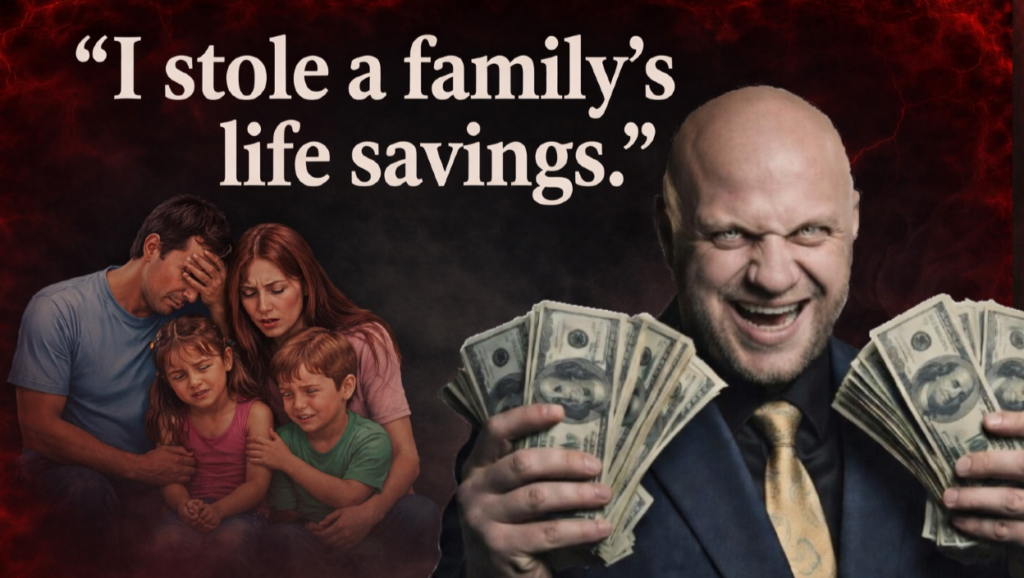
They stole a family’s life savings.
That phrase is brutal. It may be disputed. It may be legally contested. But once a phrase like that attaches to a collector-facing brand, the damage is deep.
Because it hits the exact nerve the business depends on.
Collectors need to trust chain of custody. Families need to trust the store with inherited or sentimental collections. Customers need to believe the company will not hide behind paperwork if something goes wrong.
BAM’s response has taught the public the opposite lesson.
It has taught people that if a serious dispute arises, corporate may try to distance itself. Operators may point backward. The store may close. Police may protect the wrong people. And the customer may be left fighting alone.
That is a brand credibility nightmare.
The American Fork Police Response Looks Corrupt
The American Fork police angle makes the story even more disgusting.
The transcript does not show neutral law enforcement calmly keeping the peace. It shows what appears to be a pattern of police power being used against the people pressuring Joshua Johnson.
That is the plain read.
Ben tries to contact Johnson for a good-faith conversation. Police appear.
Ben’s group gets stopped for an alleged traffic violation that he says footage disproves.
At Brandon Best’s house, an officer appears to repeat Brandon’s defense.
A heroin allegation leads to a long search, no drugs are found and the pressure continues.
Attempts to serve court papers trigger repeated police involvement.
Court papers are questioned even after the court confirms the case exists.
A GoFundMe and public criticism become the basis for criminal attention.
A phone is seized, and locking it is treated as destruction of evidence.
A search warrant reportedly targets “stolen LEGO merchandise” at the home of the people exposing the missing LEGO dispute.
That is not normal.
That is not “just doing their job.”
That looks like institutional favoritism and retaliatory policing.
The issue is not that police responded to calls. The issue is that they appear to have repeatedly acted in a way that benefited one side of a private dispute: the side being criticized, sued and served.
That is why the corruption label sticks.
Not because we have proof of a cash bribe. Because corruption can also mean public power being bent toward private interests. And that is exactly what this looks like.
The Police Look Like A Shield For Joshua Johnson
The most troubling part is how the police response appears to function.
It does not look like public safety.
It looks like a shield.
A person wants to talk to Josh. Police intervene.
A person wants to serve Josh. Police intervene.
A person wants to criticize Josh. Police intervene.
A person wants to raise money tied to the dispute. Police intervene.
A person keeps pushing. Police escalate.
That is the pattern.
Police do not have to like Reckless Ben. They do not have to approve of his tactics. They can enforce trespass rules. They can stop threats. They can keep people off private property.
But they cannot become a private security force for someone trying to avoid civil pressure.
That is the line.
Based on the transcript, American Fork police appear to have crossed it again and again.
The LDS Community Optics Are Ugly
The LDS angle has to be handled carefully.
There is no public evidence that the LDS Church as an institution ordered police action, coordinated with BAM or directed anyone to protect Joshua Johnson, Brandon Best or Ammon McNeff.
That should be said clearly.
But the optics of a tight local religious/community network are still ugly.
When the accused business figures, corporate leadership and local officers are perceived as belonging to the same regional religious and social ecosystem, people will naturally ask whether informal loyalty played a role. That is not bigotry. That is a rational concern about local power.
Small communities can protect their own. Church networks, business networks, school networks, police networks and civic networks can overlap. When they do, neutrality can rot quietly.
The transcript’s LDS/community discussion should not be used to smear every Mormon or every LDS institution. That would be wrong and lazy.
But it is absolutely fair to say this:
The local LDS-connected optics look corrupt as hell from the outside.
If people tied to the same community network receive fast, aggressive police protection while outsiders trying to serve papers and criticize them get searched, arrested and raided, the public is going to assume favoritism. That is exactly how institutional trust collapses.
The right response from American Fork police should be transparency. Release records. Explain the stops. Explain the searches. Explain the arrests. Explain the warrant. Explain the redactions. Show that officers were neutral.
Because right now, the appearance is not neutral.
It looks like a local power structure protecting its own.
Moral Language Makes The Conduct Look Even Worse
There is something especially gross about people who present themselves as values-driven while acting like this.
If someone belongs to a religious community that teaches honesty, restitution and repentance, then hiding behind technicalities after a family allegedly loses a valuable collection is not just bad business.
It is hypocrisy.
If you wrong someone, you make it right.
That is not complicated. It is one of the most basic moral rules humans have.
So when leaders and operators connected to a values-heavy culture appear to dodge, deflect, deny and rely on police pressure, the hypocrisy is glaring.
This is not about attacking a religion. It is about asking why people who should understand restitution seem so allergic to it when the check is expensive.
Make the family whole.
That is the moral answer.
Not “call the police.”
Not “they can sue.”
Not “that was unauthorized.”
Not “we inherited the store.”
Not “corporate is not a party.”
Make the family whole.
“Sue Us” Is Not Accountability
One of the nastiest moves in disputes like this is telling the harmed person to sue.
On paper, that sounds fair. Courts exist for disputes.
In reality, it can be a weapon.
If a family loses $100,000 to $200,000 in property and is told to spend $60,000 or more just to get meaningful relief, “sue us” becomes a dare. It becomes a way for the stronger party to use cost and delay as armor.
That is not justice.
That is attrition.
BAM and the operators appear to have had every advantage: corporate structure, franchise documents, money, time, entities, lawyers, local connections and police attention that seemed to run in their direction.
Mansell had property records, a contract and a loss.
That imbalance is exactly why the public is angry.
People can see when the system is being used to wear down the weaker party.
And they hate it.
The Correct Leadership Response Was Obvious
BAM could still have protected itself while doing the right thing.
The responsible response would have been:
- Freeze all disputed inventory immediately.
- Bring in a neutral third-party auditor.
- Compare inventory against Mansell’s records.
- Return any identifiable unsold property.
- Pay for anything sold or missing.
- Publicly apologize for the failure of process.
- Pursue reimbursement from whoever BAM believes caused the loss.
That would have been clean.
Instead, the public sees denial, technicality and escalation.
That is why this feels morally bankrupt. The right answer was not hard to identify. It was only expensive.
And when leaders choose the cheaper legal position over the obvious ethical repair, they tell the public exactly who they are.
This Is Potentially Irreparable Brand Damage
Can Bricks & Minifigs recover from this? Maybe.
But the damage may be permanent in the communities that matter most.
LEGO collectors remember. Resale communities remember. People who buy, sell and trade valuable items remember stories about missing property, disputed ownership and corporate avoidance.
The internet also remembers.
Years from now, someone searching Bricks & Minifigs may find this story. They may see Ammon McNeff’s name attached to it. They may see Joshua Johnson and Brandon Best tied to it. They may see American Fork police tied to it. They may see the phrase “family’s life savings.”
That is not a small PR bruise.
That is reputational rot.
BAM may be able to keep opening stores. It may keep making money. It may survive legally. But credibility is not the same as survival.
A brand can survive and still be permanently diminished.
The Bottom Line
BAM Franchising’s handling of the Mansell LEGO dispute is one of the clearest examples of failed leadership I have seen.
The ethical answer was simple: make the family whole, then fight about internal liability later.
Ammon McNeff appears to have chosen corporate distance instead. That is a failure of leadership.
Joshua Johnson and Brandon Best appear tied to the post-transition operation where the practical questions matter most: who had the sets, who controlled the inventory and why was Mansell not made whole? Their conduct, as described publicly, looks awful.
The American Fork police response looks like apparent corruption. Not just bad optics. Not just clumsy policing. A pattern of intervention that appears to protect Joshua Johnson from lawful pressure while treating the people exposing the dispute as the problem.
And the LDS/community-network optics are ugly. The church itself has not been shown to be a direct actor, but the appearance of a local religious/business/police ecosystem protecting its own is poisonous.
This is what destroys brand credibility.
Not one mistake. Not one bad employee. Not one messy store transition.
A chain of choices.
A family allegedly loses property.
Corporate denies responsibility.
New operators dodge accountability.
Police appear to protect the accused side.
The brand becomes a national punchline.
That is not bad luck.
That is leadership failure.
And it is exactly what moral bankruptcy looks like when it puts on a corporate polo and calls itself a franchise system.
FAQs
Has BAM Franchising Been Found Liable In Court?
Not fully. The dispute has not been completely resolved in court. This article is an opinion based on public reporting, transcripts and the evidence described so far.
Why Is Ammon McNeff Being Criticized So Harshly?
Ammon McNeff is the CEO of BAM Franchising and the public face of the corporate response. Even if he argues that BAM was not legally responsible for the consignment agreement, he still had a leadership responsibility to protect trust in the Bricks & Minifigs brand and make the harmed family whole.
Why Do Joshua Johnson And Brandon Best Matter?
Johnson and Best are tied to the post-transition store operation through Baker Bricks. They matter because the central practical issue is what happened to the remaining consigned inventory after the store changed hands and who controlled it.
Why Does This Hurt Every Bricks & Minifigs Franchisee?
The scandal damages the national brand. Even unrelated franchisees may now face customer distrust because BAM’s leadership allowed the dispute to become a public symbol of missing property, corporate deflection and poor accountability.
Why Does The American Fork Police Response Look Corrupt?
The police response looks corrupt because officers appear to repeatedly intervene against the people trying to contact, serve and publicly criticize Joshua Johnson while treating the accused side as protected. That pattern suggests bias, selective enforcement and possible misconduct.
Is The LDS Church Proven To Be Involved?
No. The LDS Church has not been shown to be a direct legal actor in the dispute. But the local LDS/community-network optics are bad because the transcript and public discussion create the appearance of overlapping religious, business and police loyalties. That appearance deserves scrutiny, not broad religious blame.